
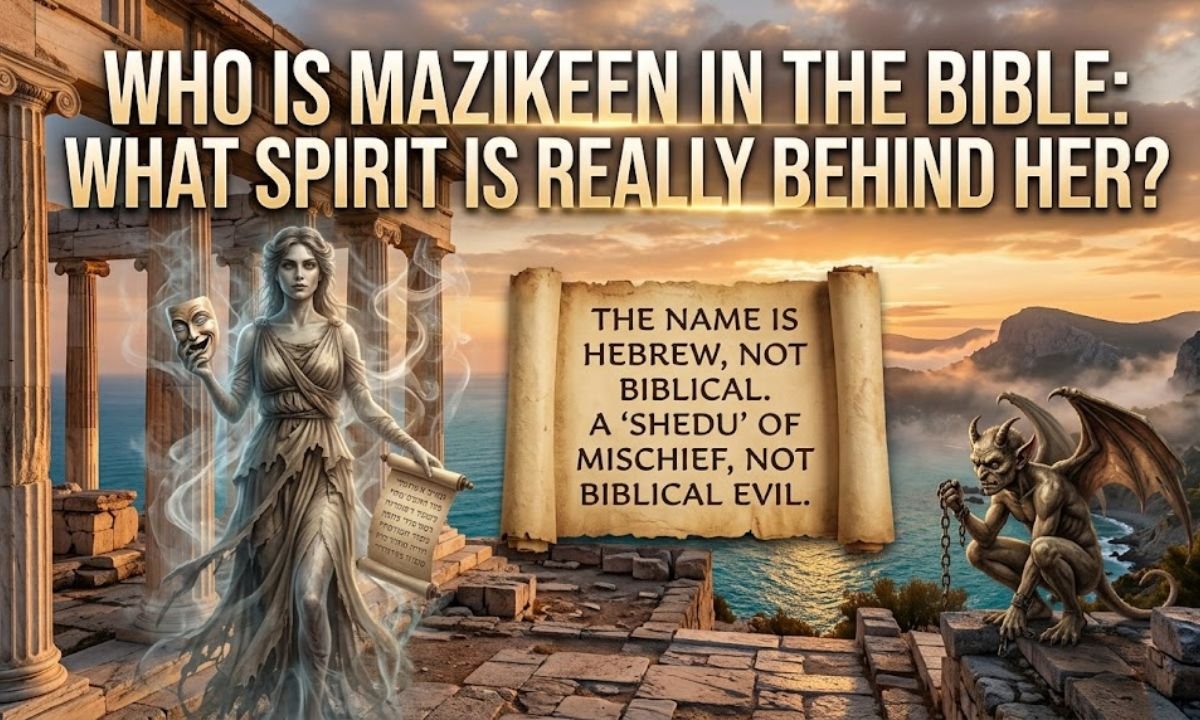
If you came here after watching Lucifer or reading Neil Gaiman’s Sandman comics, here’s the direct answer: Mazikeen is not in the Bible. She never appears in Scripture, in any book, in any translation. She’s a fictional character. But the name behind her comes from something real, and understanding it can actually point you toward some solid biblical truth about fear, spirits, and where your trust belongs.
So Where Does the Name “Mazikeen” Actually Come From?
The name is not biblical. It comes from a Hebrew and Aramaic word, mazzikin (מַזִּיקִין), meaning “those who harm” or “damagers.” This term shows up in the Talmud, the central text of Rabbinic Judaism, not in the Old or New Testament.
In Talmudic folklore, the mazzikin were described as invisible spirits, capable of causing minor annoyances or real harm, existing somewhere between the human and angelic worlds. They’re part of Jewish tradition and legend, not part of the Bible’s own text.
Writer Neil Gaiman borrowed this folklore term in 1990 when he created the character Mazikeen for DC Comics’ Sandman series. She later became a major character in the Netflix show Lucifer, played by Lesley-Ann Brandt, portrayed as a demon and the daughter of Lilith.
In short: the character is fiction. The word she’s named after is folklore. Neither one is Scripture.
Why This Distinction Matters for Christians
It’s easy, especially after a compelling TV show, to wonder if a character is rooted in something biblically real. That curiosity isn’t wrong. It often comes from a good place: a desire to understand the spiritual world correctly rather than through entertainment.
But Scripture gives believers a clear standard. We’re told to test what we hear against God’s Word, not against folklore, legend, or fiction, however well written.
“Beloved, do not believe every spirit, but test the spirits to see whether they are from God.” (1 John 4:1)
This verse doesn’t just apply to false prophets in the ancient world. It applies to how we sort truth from story today. A fictional demon’s backstory, however creative, was never meant to teach us theology.
What the Bible Actually Says About Demons and Harmful Spirits
While Mazikeen herself is not biblical, the Bible does speak clearly about the reality of spiritual evil. Scripture doesn’t leave believers guessing about whether harmful spiritual forces exist.
“For we do not wrestle against flesh and blood, but against the rulers, against the authorities, against the cosmic powers over this present darkness, against the spiritual forces of evil in the heavenly places.” (Ephesians 6:12)
This verse names the real struggle: not folklore demons with invented names, but spiritual opposition that God’s Word takes seriously and equips us to face.
“Submit yourselves therefore to God. Resist the devil, and he will flee from you.” (James 4:7)
Notice the order here. Submission to God comes first. Resistance follows from that submitted place, not from fear or fascination with a spirit’s name or mythology.
Read More: Tristan Meaning in Greek: Amazing Facts, 10 Things to Know
Should Christians Be Afraid of Names Like “Mazikeen”?
No. Fear is not the posture Scripture calls believers to when it comes to spiritual darkness. Curiosity about pop culture is normal, but fear rooted in a fictional character’s mythology has no biblical foundation.
“For God gave us a spirit not of fear but of power and love and self-control.” (2 Timothy 1:7)
If a name from a TV show or comic book has unsettled you, that unease is worth bringing to God directly rather than carrying alone.
A Prayer for Peace When Spiritual Questions Feel Unsettling
Heavenly Father,
You are the God who made heaven and earth, and nothing hidden or unseen is hidden from You. I come to You because something I encountered left me with questions, and I don’t want to carry confusion when I can bring it to You instead.
Lord, I ask You to give me discernment. Help me tell the difference between stories made for entertainment and the truth You have given us in Your Word. Where I’ve felt unsettled or afraid, replace that fear with Your peace.
You said You did not give me a spirit of fear, but one of power, love, and a sound mind. I choose to stand on that promise today. Guard my mind from confusion, and keep my heart anchored in what is true.
Thank You that I don’t have to figure out the spiritual world on my own. Your Word is enough. Your presence is enough. I trust You to lead me into truth and to keep me safe under Your care.
In Jesus’ name, Amen.
How Prayer Helps When You’re Sorting Fact From Fiction
Prayer isn’t only for major crises. It’s also for the smaller moments when your mind is unsettled by something you read or watched. Bringing those questions to God does a few things:
- It reminds you that God is not distant or hard to reach with “small” concerns.
- It replaces confusion with a request for clarity, rather than letting the question sit unresolved.
- It reorients your focus back to Scripture as the standard for truth.
- It quiets fear that has no real spiritual weight behind it.
You don’t need the perfect words. A simple, honest prayer is enough.
Bible Verses to Hold Onto When a Spiritual Question Unsettles You
On testing what you hear:
“Test everything; hold fast what is good.” (1 Thessalonians 5:21)
On God’s protection:
“The Lord is my rock and my fortress and my deliverer, my God, my rock, in whom I take refuge.” (Psalm 18:2)
On having a sound mind instead of fear:
“You keep him in perfect peace whose mind is stayed on you, because he trusts in you.” (Isaiah 26:3)
Each of these verses points in the same direction: your security doesn’t come from figuring out every mythological detail. It comes from where you place your trust.
Common Mistakes People Make When Researching Spiritual Topics Like This
Mistake: Assuming that if a name sounds Hebrew or ancient, it must be biblical. Biblical perspective: Many names in folklore, legend, and fiction borrow ancient languages without being part of Scripture. Always check the actual text of the Bible, not just the sound or feel of a word.
Mistake: Letting curiosity turn into fear. Biblical perspective: God calls us to discernment, not dread. A fictional character’s backstory carries no spiritual authority over your life.
Mistake: Searching for spiritual answers only in pop culture or folklore instead of Scripture. Biblical perspective: The Bible remains the trustworthy source for understanding good, evil, and everything in between.
How to Apply This in Everyday Life
- When a show, book, or article raises a spiritual question, pause and ask whether it’s actually addressed in Scripture.
- Keep a short list of verses on discernment and peace that you can return to.
- Pray briefly the moment a question unsettles you, rather than letting it sit and grow.
- Talk with a trusted pastor, mentor, or Christian friend if a topic keeps coming back to mind.
- Spend a few quiet minutes in Scripture rather than searching further into folklore or fiction for answers.
FAQ’s
Is Mazikeen mentioned in the Bible?
No. Mazikeen does not appear anywhere in Scripture. She is a fictional character created by Neil Gaiman in 1990 for DC Comics’ Sandman series, later featured in Netflix’s Lucifer.
What does the name Mazikeen actually mean?
It comes from the Hebrew and Aramaic word “mazzikin,” meaning “those who harm” or “damagers.” This term appears in the Talmud, a Jewish rabbinic text, not in the Bible.
Does the Bible talk about demons at all?
Yes. Scripture affirms the reality of spiritual evil, including in passages like Ephesians 6:12 and James 4:7, though it never uses the name “Mazikeen” or describes the mazzikin specifically.
Should I be worried if a TV character’s name unsettles me?
Bring the concern to God in prayer rather than carrying it alone. Scripture reminds believers that God gives a spirit of power, love, and a sound mind, not fear (2 Timothy 1:7).
What Bible verse can I pray if I feel unsettled by something spiritual I encountered?
Isaiah 26:3 is a good one to return to: “You keep him in perfect peace whose mind is stayed on you, because he trusts in you.” It redirects your focus from the unsettling thing back to God’s steadiness.
A Simple Takeaway
Mazikeen belongs to fiction and folklore, not to the Bible. But the questions she raises, about fear, spiritual reality, and where truth actually comes from, are worth bringing to God. Scripture doesn’t ask you to master every myth. It asks you to trust the One who already has authority over everything unseen. Whatever unsettled you enough to search this out, let it lead you back to prayer and to His Word, where real peace is found.

Skybry is a passionate writer and faith enthusiast dedicated to sharing inspiring prayers, spiritual reflections, and uplifting content that brings peace, hope, and encouragement to readers worldwide.
1 thought on “Who Is Mazikeen in the Bible: What Spirit Is Really Behind Her?”