
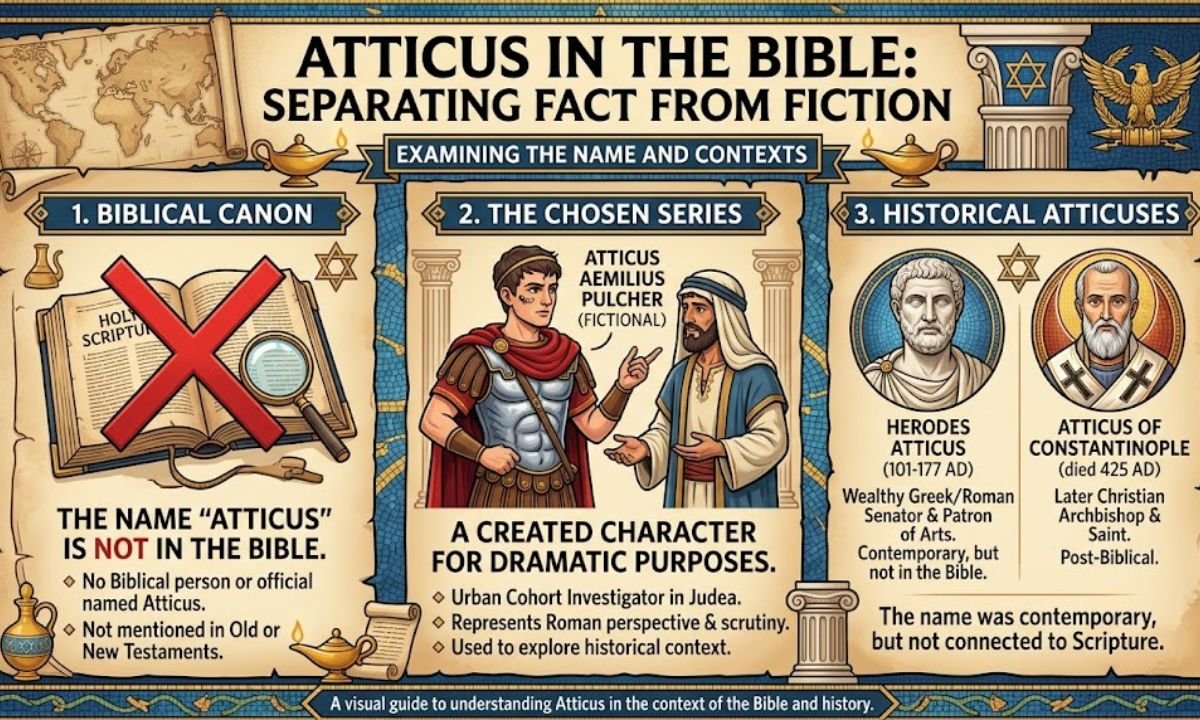
If you searched for Atticus in the Bible, here is the direct answer: the name Atticus does not appear anywhere in the Old or New Testament. There is no biblical character named Atticus. What you’re likely sensing, though, is something real. Many beautiful, meaningful names surround Scripture without being written into it, and God still has something to say to you through that search.
You may have come across this name in a book, a baby name list, or a favorite show, and wondered if it carried any spiritual weight. It’s a fair question, and it opens the door to something worth exploring: what names mean, how God views identity, and how His Word can guide you even when a specific name isn’t found in its pages.
Is Atticus a Name in the Bible?
No, Atticus is not a name found in the Bible. You will not find him listed among the apostles, the kings of Israel, the prophets, or any figure in the Gospels or Epistles. Bible scholars and concordances confirm this consistently: Atticus simply is not a biblical name.
That doesn’t make the name meaningless or disconnected from history. It just means its roots lie outside of Scripture, in the world of ancient Greece and Rome.
What Does the Name Atticus Actually Mean?
Atticus comes from the Greek word for Attica, the region surrounding Athens. The name essentially means “man of Attica” or “man of Athens.” In the ancient world, it carried a sense of culture, learning, and refinement, since Athens was known as a center of philosophy and wisdom.
Interestingly, Athens itself does appear in the Bible. The apostle Paul preached there, and Scripture describes the Athenians as people who loved discussing new ideas (Acts 17:21). So while Atticus the name is absent from the Bible, Atticus the place, in a sense, is part of the biblical story.
Historical Figures Named Atticus
A few real historical people carried this name during and after the biblical era, which may be part of why the name feels vaguely biblical to some readers.
Titus Pomponius Atticus was a Roman scholar and close friend of Cicero, known for his integrity and wisdom. Herodes Atticus was a wealthy Greek philosopher who lived in the second century AD, during the early Christian era. Later, Atticus of Constantinople served as a Christian bishop in the fifth century.
None of these men are mentioned in Scripture. They lived near or after biblical times, and their stories belong to secular and church history rather than the biblical text itself.
Why People Confuse Atticus With Biblical Names
It’s easy to see why someone might assume Atticus has biblical roots. It has a classical, dignified sound similar to names like Titus, who genuinely is a New Testament figure and a close companion of the apostle Paul.
Titus and Atticus are different names with different origins, but their similar sound leads to natural confusion. If you were hoping for a biblical name, Titus is a wonderful, Scripture based alternative worth considering.
Read More: 100+ Short Prayers for Peace, Strength, and Every Season of Life
What the Bible Says About Names and Identity
Even though Atticus isn’t found in Scripture, the Bible has a great deal to say about names and identity, and this is where the real spiritual encouragement begins.
Scripture teaches that God knows each person by name and cares deeply about who they are, not just what they are called. Isaiah 43:1 reminds us of this truth: “I have called you by name, you are mine.” This verse speaks to God’s personal, intimate knowledge of every individual. Whatever name you carry, or whatever name you’re considering for someone you love, God’s attention is on the heart and character behind it.
Proverbs 22:1 also offers wisdom here, teaching that a good name is more valuable than great riches. This isn’t about the name itself having power, but about the character, integrity, and reputation a person builds over a lifetime.
A Prayer for Wisdom When Choosing or Reflecting on a Name
Whether you’re naming a child, researching your own name’s meaning, or simply curious about Atticus and its connection to Scripture, this prayer can guide your heart toward God.
Heavenly Father,
Thank You for knowing me by name and for caring about every detail of my life. I bring my questions and my curiosity to You now, trusting that You are a God of wisdom and truth.
Lord, help me seek understanding with a humble heart. Where I search for meaning in names, history, or identity, remind me that my true worth and purpose come from You alone. Give me discernment to separate truth from confusion, and help me build a life and a name that reflects Your character.
If I am considering a name for someone I love, guide my heart toward wisdom. Let the name I choose, and the life we build around it, point toward integrity, faith, and love for You.
Thank You for Your Word, which never fails and always leads me back to what is true. I trust You with the details of my life, even the small ones. In Jesus’ name, Amen.
Bible Verses to Reflect On About Names and God’s Presence
A few key verses offer deeper insight into how Scripture views names, identity, and God’s personal involvement in our lives.
Isaiah 43:1 shows that God calls each of us by name, a reminder that we are personally known and valued by Him.
Proverbs 22:1 teaches that a good reputation, or a “good name,” is worth more than material wealth, pointing us toward character over status.
Acts 17:21 describes the intellectual culture of Athens, the very region from which the name Atticus originates, showing how God’s story intersects with the wider ancient world even outside of named biblical figures.
Philippians 4:8 encourages believers to focus their minds on what is true, honorable, and worthy of praise, a helpful guide whenever we’re sorting through history, names, or ideas that mix fact with speculation.
How Prayer Can Help When You’re Searching for Answers
It’s easy to assume prayer is only for major life crises, but prayer is also a wonderful response to curiosity and searching. When you bring even small questions to God, like the meaning behind a name, you’re practicing the habit of turning to Him in everything.
Prayer in moments like this can help you slow down, seek truth over speculation, and remember that your relationship with God matters more than any single fact you’re trying to confirm.
Common Misunderstandings About Biblical Names
Mistake: Assuming a name is biblical simply because it sounds ancient or dignified. Many respected names, including Atticus, come from Greek or Roman history rather than Scripture. Sounding old or noble doesn’t make a name biblical.
Mistake: Believing a name must appear in the Bible to be meaningful or blessed. God’s blessing over a life isn’t tied to whether a name is found in Scripture. What matters is the character and faith of the person carrying it.
Mistake: Confusing similar sounding biblical and non-biblical names. Atticus and Titus are a common example. Taking a moment to verify a name’s true origin helps avoid this mix-up.
How to Apply This in Everyday Life
If you’re drawn to the name Atticus, or simply curious about its background, here are a few simple ways to keep your search rooted in faith.
Take time to read the verses mentioned above slowly, allowing them to shape how you think about identity and character. Pray for wisdom if you’re choosing a name for a child. Consider Titus as a biblically grounded alternative if a Scripture based name matters to you. Journal your thoughts if you’re processing why this name caught your attention in the first place. Thank God for knowing you personally, regardless of what any name means historically.
Frequently Asked Questions
Is Atticus mentioned anywhere in the Bible?
No. Atticus does not appear in the Old Testament or the New Testament. There is no biblical character by this name.
What does the name Atticus mean?
Atticus means “man of Attica” or “man of Athens,” referring to the region in ancient Greece surrounding the city of Athens.
Is there a biblical name similar to Atticus?
Yes, Titus is a biblical name that sounds somewhat similar and belongs to a companion of the apostle Paul mentioned several times in the New Testament.
Was Atticus Finch based on a biblical figure?
No. Atticus Finch, the character from Harper Lee’s novel, is fictional and was not modeled after any biblical figure, though many readers connect his character with values often associated with faith, such as justice and integrity.
Can I still choose Atticus as a name even though it isn’t in the Bible?
Yes. Many meaningful names throughout history are not found in Scripture. What matters most is the character and faith you nurture in the person who carries the name.
What Bible verse can I pray over a name or identity?
Isaiah 43:1 is a comforting verse to pray, reminding you that God calls each person by name and knows them personally.
Final Thoughts
Atticus is not a name found in the Bible, but your search for its meaning doesn’t have to end without spiritual value. Scripture reminds you again and again that God knows you by name, values character over titles, and welcomes even your smallest questions in prayer. Whatever led you here today, let it be an invitation to trust Him a little more with the details of your life.

Skybry is a passionate writer and faith enthusiast dedicated to sharing inspiring prayers, spiritual reflections, and uplifting content that brings peace, hope, and encouragement to readers worldwide.
1 thought on “Atticus in the Bible: Meaning, History, and What Scripture Teaches Us About Names”